Until the umbilical cord stump falls off, a newborn gets cleaned with a sponge bath, not a tub. The American Academy of Pediatrics puts it plainly: give only sponge baths until the stump falls off, which usually happens by about one or two weeks of age.
First-time nerves are normal. Calm comes from three things done in order: warm the room, lay everything out before undressing begins, and follow a predictable washing sequence that keeps most of the baby covered throughout.
Set Up Everything Before Undressing the Baby
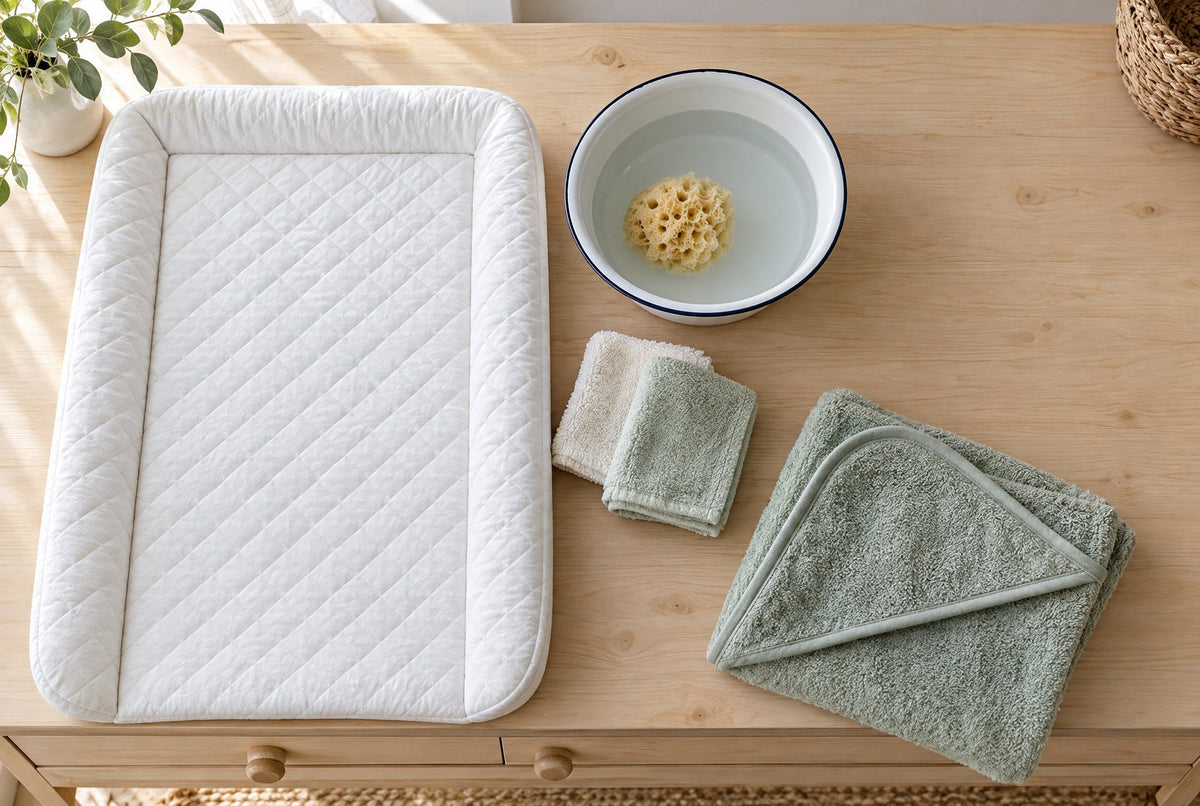
Most mid-bath panic traces back to one missing item. The AAP's first instruction is to get supplies ready before beginning, with a basin of water, a damp washcloth rinsed in soap-free water, a dry towel and anything else needed all within reach.
Gather the small kit first:
- Two washcloths, one for washing and one for rinsing, plus a dry towel or two
- A small basin of comfortably warm water
- A clean diaper and a fresh onesie or sleeper, ready to go
- Cotton pads for wiping around the eyes, if a parent prefers them to a cloth
Then choose the surface. The AAP suggests a changing table, bed, floor or counter next to the sink, padding any hard surface with a blanket or fluffy towel, and adds the rule that matters most: if the baby is on a surface above the floor, always use a safety strap or keep one hand on them to prevent falls. The floor removes the worry entirely.
Pre-open the clean diaper and lay the clothes out in the order they go on, so dressing afterward takes seconds.
Keep the Room and the Baby Warm
A newborn loses heat fast once the onesie comes off, and that single fact shapes the whole bath. Aim for a warm, draft-free room: shut the window, close the door and let the space settle before undressing begins.
Water warmth needs less precision than instinct suggests. It should feel pleasantly warm, never hot, tested against the inner wrist or elbow. Wrung-out washcloths cool quickly against the air, so refreshing the basin partway through is worth the small pause.
The AAP's method for holding heat is specific and easy to follow: during the sponge bath, wrap the baby in a dry towel and uncover only the parts being actively washed. Pat each crease dry as you go, so no dampness lingers to chill the skin. If a baby starts to shiver or the fussing ramps up hard, stop, re-cover, and warm back up before carrying on.
Try a Swaddled Sponge Bath for a Baby Who Startles
Some babies fight the bath the moment air hits their skin. A swaddled version answers that: the baby stays loosely wrapped in a muslin or soft towel, and only one small area is uncovered, washed and re-covered before the next.
Wrapped babies tend to feel more contained, so the shift from warm cloth to open air rattles them less. A parent also handles less bare, wet skin at once, which steadies slippery moments before they start.
Safety stays simple. The wrap goes on loosely with the face fully clear, never near the nose or mouth. Slide it down to expose just the patch being cleaned, then draw it back up before moving on. If the wrap soaks through and warmth becomes hard to hold, switch back to the towel-drape method.
One thing worth holding onto: a baby who hates that first bath is behaving completely normally. A short, calm wash a baby tolerates beats a thorough one that ends in tears.
Wash Top to Bottom, Clean Areas First
The order carries most of the calm: start with the face, then dip the cloth in the basin before washing the rest of the body, and finally the diaper area. Working from the cleanest part down keeps a fresh cloth doing fresh-cloth work.
- Face and eyes. Use plain water only, no soap, being careful not to get water into the eyes or mouth. Wipe each eye once, from the inner corner beside the nose out toward the ear, switching to a clean part of the cloth for the second eye. Then move gently around the mouth, nose and cheeks. Nothing goes inside the nose or ears.
- Neck, ears and creases. The AAP flags these specifically, asking for special attention to the creases under the arms, behind the ears and around the neck. Milk and spit-up settle there. Wipe the folds open, then pat them dry right away.
- Hair and scalp. Only if it needs it. Cradle the head and neck, use a damp cloth briefly, then dry the head and re-cover it quickly, since that is where a bare baby sheds heat fastest.
- Upper body, then legs. Unwrap just the chest and arms, clean the armpits, hands and between the fingers, pat dry and cover back up. Move to the legs and feet with the torso still draped, cleaning between the toes. For the back and the nape, a slow, supported roll to one side does it.
- The diaper area last. Only then does the diaper come off. The AAP names the genital area as one of the creases needing special attention. Wipe front to back, clean only the external area, and never retract a foreskin. Pat the skin folds thoroughly dry, since trapped moisture is what irritation feeds on.
Then dry, diaper and dress, checking every fold is fully dry first. On an overtired evening, a partial sponge bath covering just the face, neck and diaper area is perfectly fine.
Keeping the Cord Stump Dry
The aim is simple: keep the stump from sitting damp. The AAP's guidance is to keep it clean and dry, with no need to use alcohol on it, and to keep the diaper folded below the cord so urine does not soak it.
During the wash, clean around the stump rather than soaking it. If a splash reaches it, pat the spot dry with a soft towel. Cleaning only matters when the area is visibly soiled, and then plain water on a soft cloth and a gentle pat dry handles it.
On timing, the AAP notes the stump should dry and fall off by the time a baby is three weeks old, and that a doctor's visit is needed if it is still there beyond that. A few drops of blood on the diaper around the time it falls off is normal, but if the cord actively bleeds, call the doctor immediately.
The signs of a cord infection are worth memorising: a foul-smelling yellowish discharge from the cord, red skin around the base of the cord, or crying when the cord or the skin next to it is touched.
How Often, and What Goes On Afterward
Newborns do not need a bath every day. The AAP notes they rarely sweat or get dirty enough, and that three baths per week during the first year may be enough, since bathing more frequently can dry out a baby's skin.
It is also worth knowing why a hospital may have waited before the very first bath. The AAP notes the World Health Organization recommends delaying a baby's first bath until 24 hours after birth, partly because vernix, the waxy white coating a baby is born with, acts as a natural moisturiser, and the AAP advises leaving it on a newborn's skin for a while to help prevent delicate skin drying out.
Skincare in these weeks stays minimal. Plain water does most of the job, and there is no need to add products to a routine that is working.
For the weeks after the stump heals

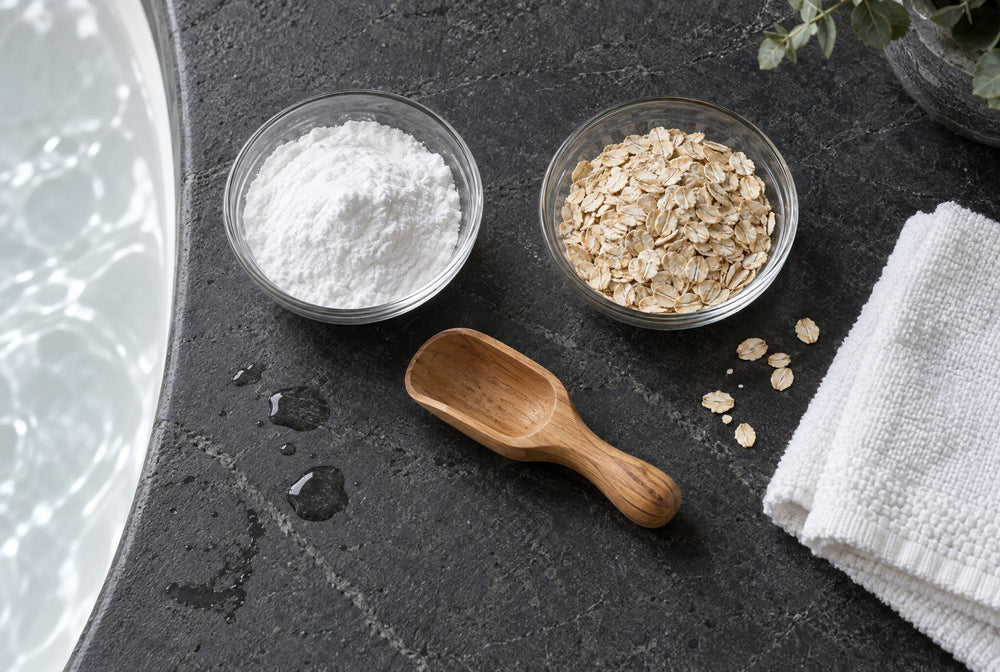
Once a baby graduates to the tub, the Mavey Jaymes Soothing Bath Pouches slot into an unhurried routine: colloidal oatmeal, coconut, Dead Sea salt, magnesium chloride, lavender and chamomile in a biodegradable muslin pouch, four to a pack, steeped in the warm tub. The colloidal oatmeal helps soothe dry, itchy skin, while coconut helps soften the skin. The soap-free formula offers a comforting way to cleanse without leaving delicate skin feeling stripped or dry.
For skin that feels dry after a wash, the Mavey Jaymes Organic Baby Oil is a light blend of organic sunflower, coconut, jojoba, argan and avocado oils with lavender and vitamin E. Patch test anything new on a small area, introduce one product at a time, and keep everything off the cord stump until it has healed.
Worth a read when three quiet minutes turn up: why a moisturising bath-time routine matters and how to build a nurturing baby skincare routine.
Where to Begin
Bath time gets calmer with repetition rather than equipment. One warm room, one basin, two cloths and a dry towel cover the whole sponge-bath season, and the routine becomes familiar to a baby well before the words do. When the tub finally arrives, the Mavey Jaymes collection is the simplest place to see how a gentle routine fits together.
Frequently Asked Questions
How often should a newborn have a sponge bath?
Newborns do not need daily bathing. The AAP notes they rarely sweat or get dirty enough to need it, and that three baths a week during the first year may be enough, since more frequent bathing can dry out a baby's skin. Between baths, a quick wipe of the face, the neck folds and the diaper area covers the spots that actually collect milk, spit-up and moisture.
Can the umbilical cord area get wet during a sponge bath?
A small splash is not a problem as long as it is patted dry straight away. The AAP's guidance is to keep the stump clean and dry, with no need for alcohol, and to keep the diaper folded below it. A foul-smelling yellowish discharge, red skin around the base, or crying when the cord is touched are the signs of infection worth a call.
When can a baby switch from sponge baths to a tub bath?
The AAP's rule is to give only sponge baths until the umbilical cord stump falls off, usually by about one or two weeks of age. The stump should have dried and fallen off by three weeks; if it has not, that warrants a doctor's visit. Keep the first few tub baths short and comfortably warm.
Why do hospitals wait before a newborn's first bath?
The AAP notes the World Health Organization recommends delaying the first bath until 24 hours after birth, or at least six hours. Reasons include keeping a baby's temperature and blood sugar stable, protecting early skin-to-skin contact and breastfeeding, and leaving the vernix in place, which the AAP describes as a natural moisturiser worth keeping on delicate newborn skin for a while.
What should a parent do if a newborn screams during sponge baths?
Warmth almost always comes first: pause, wrap the baby close, and restart once the crying settles. A swaddled sponge bath, which keeps most of the baby wrapped, rattles them far less than open air. Shortening the wash to just what needs cleaning that day is completely fine, and a calm partial bath beats a thorough one that ends in tears.