Crusty yellow patches along a baby's scalp tempt many parents to scrape, and scraping is exactly what leaves an irritated head worse off. Using baby oil for cradle cap softens the scales first so they loosen at the next gentle wash instead of being picked away. This is not a folk remedy: the American Academy of Pediatrics names oil as a softening step for tough scales, and the NHS suggests lightly massaging an emollient or coconut oil onto the scalp.
Does Baby Oil Actually Help Cradle Cap Scales Loosen?
Yes, and the mechanism is simple. As just highlighted above, oil sits against the dry scale, softens its grip, and lowers the friction so flakes lift with a soft comb or a gentle wash rather than a fingernail. The AAP's wording is direct: for tough scales, apply a little mineral oil, coconut oil or petroleum jelly, let it sit overnight to soften the scales, then wash and massage or brush the scalp as usual.
It helps to be clear about what "help" means. Oil is a loosening tool. It does nothing to the underlying phase a baby is passing through, and it makes no promises about how fast the patches clear. The AAP is explicit that cradle cap does not need treating at all and usually goes away by itself within weeks or months. All the oil does is buy easier removal at the next wash, which keeps the expectation realistic and the routine low-stress.
Two habits trip up oil routines most. The first is using far too much, on the theory that heavier soaking works faster, which mostly leaves a greasy scalp and a slippery baby. A thin film is plenty. The second is skipping a proper wash afterward, so leftover oil lingers and can trap the very flakes it just loosened.
How to Choose a Baby Oil That Rinses Out Clean
An oil earns its keep here by doing three things well: spreading thin across the scalp, staying put long enough to soften the crust, and washing out cleanly at the next bath. An oil that pools thick or clings after a rinse defeats the purpose.
What we use for this

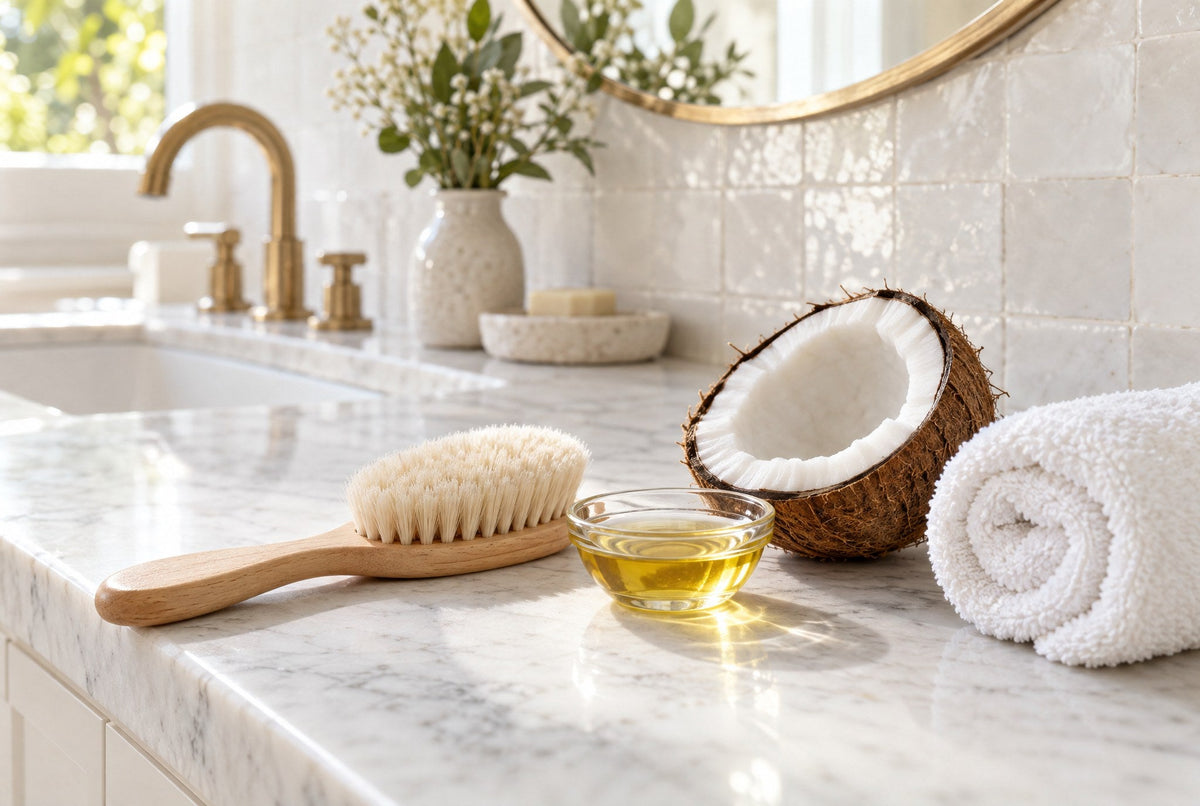
The Mavey Jaymes Organic Baby Oil has ten ingredients: organic sunflower, coconut, jojoba, argan and avocado oils, with caprylic/capric triglyceride, lavender, vitamin E, squalane and tamanu. Coconut oil is one of the three the AAP names for this job, and the lighter-bodied blend is built to absorb rather than sit slick.
What makes Mavey Jaymes a strong choice for this routine is the combination of nourishing oils rather than relying on a single ingredient. The blend helps soften stubborn flakes while moisturizing the scalp, making them easier to loosen with a soft baby brush before washing. For parents looking for a gentle, repeatable cradle cap routine, it offers a practical way to care for both the buildup and the dry skin underneath.
A Step-by-Step Cradle Cap Oil Routine
The routine works best when nothing feels rushed, and the fastest way to rush is to start unprepared. Pick a stretch when the baby is calm, a lull after a feed or before an evening bath, and set a soft brush or baby comb and a mild wash within arm's reach.
- Soften. A small amount of oil goes onto the flaky patches, worked in with fingertips for thirty to sixty seconds. How long it then sits is the one place guidance varies: the AAP's instruction for tough scales is to leave it overnight, while a light dusting needs only a few minutes. The look and feel of the flakes guide it more than any clock.
- Lift. A soft brush or baby comb, drawn in one direction with barely any pressure, catches the loosened scale without dragging at the scalp. The AAP names gentle massage, a soft brush or a baby comb as the tools for this. If the skin starts to look pink or the baby fusses, that is the signal to stop for the day.
- Wash it out. A gentle, thorough shampoo lifts the oil and the softened scale together, followed by a proper rinse so no film lingers. The Mavey Jaymes Shampoo & Body Wash covers the scalp and body in one step. The AAP's note here is to use a mild baby shampoo and check with a pediatrician before using anything medicated.
- Pat dry. A soft towel, patted rather than rubbed over freshly cleaned skin.
- Repeat rather than force. Short, consistent sessions across several days ease flakes off far more kindly than one determined push. The AAP is clear that picking or scratching at the scales increases the risk of infection.
When the Combing Goes Wrong, and How to Ease Off
Some flakes cling as though glued on, and the instinct is to reach for a sharper comb or lean in harder. That is the move to resist. Stubborn scale is a signal to lighten pressure, not add it. Stop for the day and repeat the softening step on a fresh one; a second gentle pass tends to release what a forced session would only tear at.
Finding a few strands of hair tangled in the loosened flakes rattles plenty of parents, and it need not. Both the AAP and the NHS address this directly: hair may come away with the scales, and it will grow back. The fix is a lighter hand, and combing only after the oil has had time to work.
A greasy-looking scalp after the wash points to two easy adjustments. Use less oil next time, and take a closer look at the rinse. A second gentle wash clears leftover film better than more combing ever will. The tools stay simple: a soft baby brush, a fine-tooth comb and a clean washcloth do the whole job, with nothing pointed or scratchy near a baby's head.
After the wash

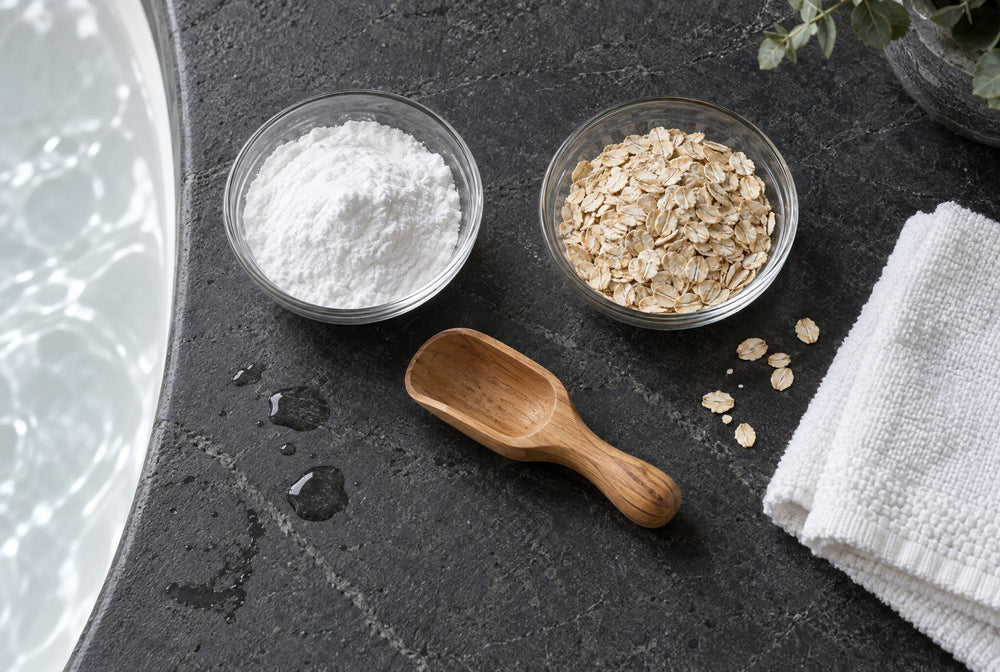
For families who want the bath itself to do some work, the Mavey Jaymes Soothing Bath Pouches steep in the tub and offer a soap-free addition to bathtime: colloidal oatmeal, coconut, Dead Sea salt, magnesium chloride, lavender and chamomile in a biodegradable muslin pouch, four to a pack.
What makes Mavey Jaymes a thoughtful addition to a cradle cap routine is its focus on caring for the skin after the flakes have been gently loosened and washed away. Colloidal oatmeal helps soothe dry, itchy skin, while coconut helps soften and moisturize. The pouches turn an ordinary bath into a comforting part of the baby's skincare routine, particularly when dryness extends beyond the scalp. They are a complement to gentle cradle cap care rather than a treatment for the buildup itself.
When to Pause Home Care and Ask for Help
Most cradle cap eases with patience, but the AAP lists specific signs worth stopping for: scales that become crusted, weepy or develop pus bumps, a rash elsewhere on the body, especially a severe one, a rash with an odour, oozing or bleeding, skin that looks swollen, or a baby who appears to be in pain or discomfort. A pediatrician can also rule out other conditions.
A visit goes smoother when a parent can describe what was tried: which oil went on, how long it stayed before washing, how often the scalp got cleaned, and how the skin looked once rinsed.
The standard precautions apply throughout: patch test a new oil on a small area first, introduce one new product at a time, use it only on clean unbroken skin, and keep any oil well clear of the eyes.
Where to Begin
Three items cover it: one oil to soften the scale, one soft brush or fine-tooth comb to lift it, and one mild wash to rinse clean. A single calm session, repeated over a few days, does the rest.
For the softening step, the Organic Baby Oil suits the job. Parents weighing where a light oil fits against a richer one will find two oils and the different jobs they do useful, while why a child's hair and scalp deserve their own routine frames where the softening step belongs. Start small, go gently, and let patience carry the flakes off.
Frequently Asked Questions
How often can I do the baby oil routine for cradle cap?
A few times a week suits most babies, adjusted to how the scalp responds rather than a fixed schedule. The AAP's broader advice while cradle cap is present is to wash a baby's hair more often, with every other day helping most babies. If the skin looks pinker after a pass, space the sessions further apart and use less oil.
How long should baby oil be left on cradle cap?
It depends on the scales. For tough scales the AAP's instruction is to let the oil sit overnight before washing. Thin, dry flakes soften quickly, so a few minutes is plenty there. Always finish with a thorough wash so no film lingers to trap the softened scale.
Which oil does the AAP recommend for cradle cap?
The AAP names mineral oil, coconut oil or petroleum jelly for tough scales. The NHS suggests an emollient or coconut oil. Coconut oil is the overlap between the two, and it is one of the ten ingredients in the Mavey Jaymes Organic Baby Oil. Any oil should be patch tested first and kept clear of the eyes.
Can baby oil be used on eyebrows or behind the ears?
Yes, using only a small dab and keeping oil well clear of the eyes. Work a thin film into the flaky spot, let it sit briefly, then cleanse gently. Shorter contact time is wise on these tender areas, and a soft washcloth handles the lifting instead of a comb near the face.
Why is cradle cap coming back after the flakes come off?
Recurrence is normal while a baby is still in the phase, which the AAP describes as usually resolving within weeks or months and in most cases by one year old. The AAP's advice for keeping it away once the scales have gone is to keep washing a baby's hair frequently with a mild baby shampoo.