An oatmeal bath sounds simple enough until you actually make one. The oats need to be ground almost to powder, tested to make sure they disperse properly, stirred into the bath without clumping, and cleaned out of the tub afterward. Get the texture wrong and you can end up with gritty flakes floating around the water, residue stuck to the bath, or oats heading straight toward the drain.
That does not mean oatmeal baths are not useful for dry, itchy or rash-prone skin. It just means the homemade version can be more work than parents expect, especially when you are already trying to get a tired or uncomfortable baby through bath time.
If you want the soothing oatmeal soak without the blender, loose oats, measuring, grit or cleanup, Mavey Jaymes Soothing Bath Pouches offer a much easier option. Each biodegradable muslin pouch contains colloidal oatmeal, coconut and chamomile, so you can simply drop one into the bath, let it steep and get on with bath time.

What an Oatmeal Bath Actually Is
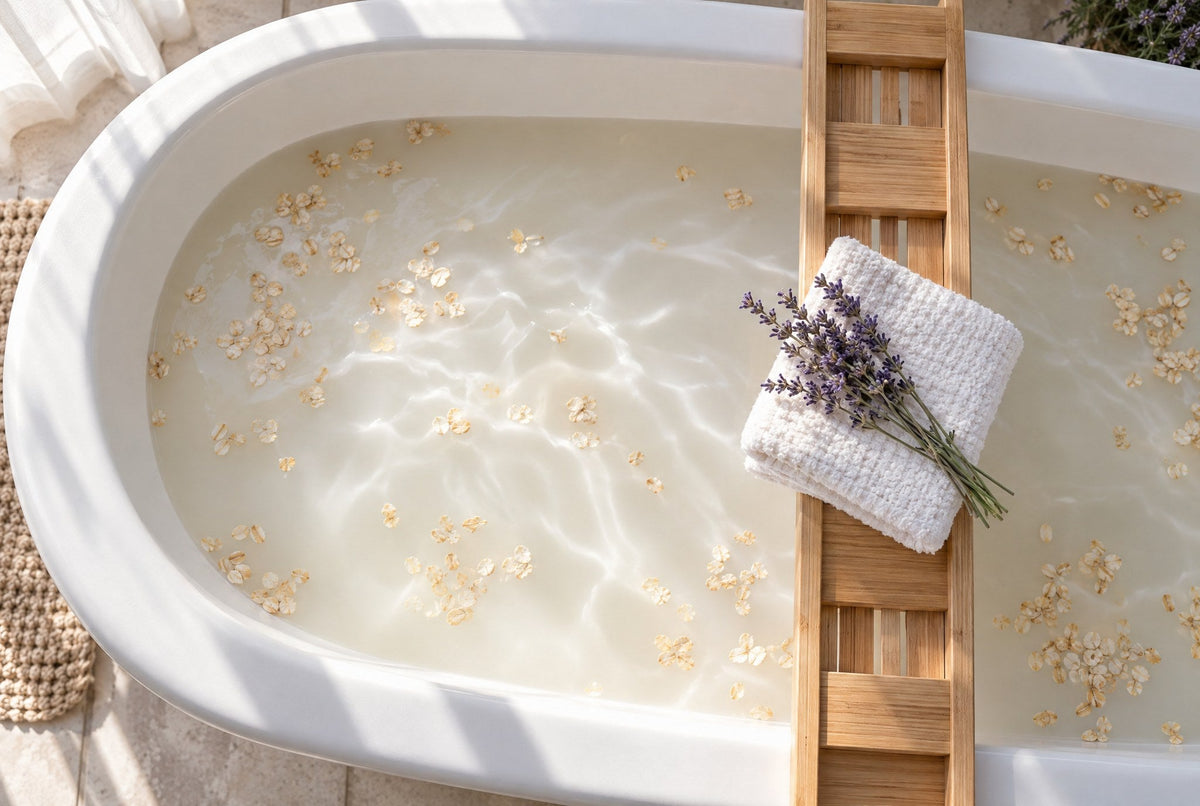
An oatmeal bath uses finely milled oats in lukewarm bathwater. Once the oatmeal has dispersed properly, the water takes on a cloudy, milky appearance and leaves a light film across the skin. It can be a comforting option when a baby's skin feels dry, itchy or irritated, particularly after cold weather or on evenings when sensitive skin needs a gentler bath.
The idea is straightforward. Making it at home is where things can become less convenient. Regular oats are not fine enough to throw straight into the tub. They have to be ground until they are almost flour-like, otherwise they tend to sink, clump or leave pieces behind.
Parents weighing whether to toss in baking soda instead can read the baking soda bath versus oatmeal bath comparison for a side-by-side look.
Why Homemade Oatmeal Baths Can Get Messy
The biggest problem with DIY oatmeal baths is texture. If the oats are even slightly too coarse, they do not dissolve neatly into the water. Instead, flakes can collect at the bottom of the tub, stick to the sides or end up around your baby's skin and bath toys.
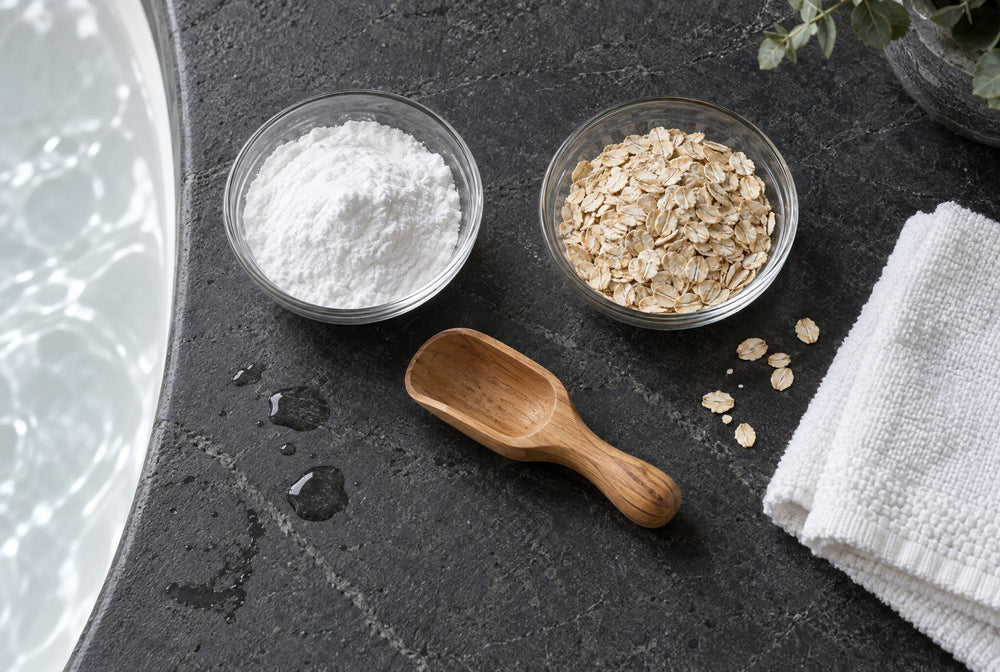
Plain, unflavored oats are the usual starting point. To make them suitable for a bath, they need to be processed in a blender, food processor or coffee grinder until the texture resembles very fine flour. And this is one of those jobs that sounds quicker on paper than it feels during an actual bedtime routine. You have to get the grinder out, process the oats, check the texture and then clean the appliance afterward.
A simple test is to stir a spoonful into a clear glass of water. If the oatmeal is fine enough, the water should turn evenly cloudy and the particles should remain suspended. If a layer quickly settles at the bottom, the oats need to be ground again.
If you do not want loose oatmeal floating through the tub, another homemade option is to tie the oats inside muslin or a clean sock and steep the bundle in the water. It cuts down on grit, but it still means measuring, filling and tying your own pouch before every bath.
That is effectively the problem Mavey Jaymes Soothing Bath Pouches solve for you. The colloidal oatmeal is already prepared and contained inside biodegradable muslin, so there is no grinding, glass test, loose powder or improvised sock involved.
The Full Oatmeal Bath, Step by Step
If you do want to make an oatmeal bath yourself, preparation makes a big difference. Having everything ready before your baby goes into the tub saves you from trying to deal with wet hands, slippery skin and stray oatmeal at the same time.
Keep a soft towel, clean cup, washcloth, fresh diaper and pajamas within reach.
For a baby who has never had oats on their skin before, parents can try a small spot-check beforehand by dabbing a little of the prepared oat water onto a small patch of skin and watching for redness.
- Fill the bath with lukewarm water: The water should feel comfortably warm rather than hot. A wrist or elbow test works well, or you can use a bath thermometer if you already have one.
- Add the oatmeal: For a homemade bath, use roughly half a cup for an infant tub or sink bath and closer to a full cup for a filled bathtub. Pouring the oatmeal straight into the bath can create clumps, so add it gradually while the water is running and keep stirring. This is another point where loose oatmeal can become messy: powder can stick to wet hands, collect around the tub or settle if the grind is not fine enough. If you are using a homemade muslin bundle, let it steep in the water and gently squeeze it until the water becomes cloudy.
- Soak for ten to twenty minutes: Gently cup or sponge the milky water over areas of dry or itchy skin rather than scrubbing.
- Be careful with slippery water: One downside of any oatmeal bath is that it makes the tub noticeably more slippery than plain water. Keep a steady hand on a baby throughout the bath and discourage toddlers from standing or lunging for toys.
- Pat the skin dry: Avoid rubbing the skin firmly with a towel. Instead, gently pat it dry and leave it slightly damp before applying moisturizer. That handoff from damp skin to a sealing layer is where a routine built around a hero powder and a few supportive essentials quietly earns its keep, turning a one-off soak into a rhythm a baby can count on.

Lock In the Calm in the First Three Minutes After the Bath
The bath is only one part of the routine. What happens immediately afterward matters too, particularly for skin that tends to become dry. Pat your baby dry while leaving the skin slightly damp, then apply a moisturizer soon afterward.
This is where the Mavey Jaymes Body Butter fits, a whipped blend of shea butter, olive fruit oil, and oat kernel extract in an organic glycerin base that melts in and comforts dry, delicate skin without greasy residue. Applying it while the skin is still slightly damp keeps the post-bath routine simple: oatmeal soak, gentle pat dry, then moisturizer. There is no need to scrub away the faint oat feel left behind after the bath.
Two habits can cancel out the whole soak. The first is waiting until a baby is fully dry before reaching for anything, which lets the best moment slip past. The second is brisk towel-rubbing, which chafes skin already asking for calm. Parents who want the fuller logic can read why the moments after a bath matter for a baby's routine.
Tailoring the Oatmeal Bath for Babies, Toddlers, and Flare Nights
The basic idea stays the same across different ages, but the way you manage the bath may change.
For a young baby, keep the water shallow and the room warm. If your baby starts to shiver or becomes unhappy, end the bath early rather than trying to reach a set soaking time.
For toddlers, the main issue is movement. Oatmeal water is slippery, and an energetic toddler trying to stand up can turn a soothing bath into a stressful one very quickly. Seated play and fewer toys can make the bath easier to manage.
For eczema-prone or particularly dry-skin nights, stick with lukewarm water, avoid extending the soak unnecessarily and choose soft pajamas or bedding afterward.
This is where a ready-made option becomes particularly handy. On a night when your baby's skin is already bothering them, the last thing most parents want to do is pull out a blender, grind oats, test the powder and clean everything afterward. The Soothing Bath Pouches keep colloidal oatmeal, coconut and chamomile contained inside biodegradable muslin, so the bath is ready with far less preparation.
For frequency, oatmeal baths are a comforting option whenever your little one's skin feels extra dry or uncomfortable. Plenty of families reach for them more often, too. A Soothing Bath Pouch makes it easy to fold an oatmeal soak into the regular bath routine, especially during drier months.
Why Mavey Jaymes Is the Hassle-Free Oatmeal Bath Option
A homemade oatmeal bath works, but there is a fair amount of preparation behind such a simple-sounding idea.
You need to:
- Measure the oats
- Grind them into a fine powder
- Check whether they disperse properly
- Avoid clumps while adding them
- Deal with a slippery tub
- Scoop out any remaining oat pieces
- Clean the residue afterward
Mavey Jaymes Soothing Bath Pouches remove most of those steps. There is no grinding, measuring or testing. The colloidal oatmeal is already inside a biodegradable muslin pouch along with coconut and chamomile. You steep it in the bath, gently squeeze the pouch to release the milky soak, and remove it when you are finished.
For parents who like the idea of an oatmeal bath but not the preparation and cleanup, that is the real appeal: you get the ritual without turning bath time into another household job. More than 5,000 families have bought from the brand, its range averages 4.9 stars, and orders come with a satisfaction guarantee.
Interested? Check out Mavey Jaymes full collection today.
Frequently Asked Questions
How much oatmeal should I put in a baby's bath?
For a homemade oatmeal bath, use roughly half a cup for an infant tub or sink bath and closer to a full cup for a filled bathtub. The oatmeal needs to be ground extremely fine and added gradually while the water runs. If you would rather skip the measuring and grinding altogether, a pre-filled Mavey Jaymes Soothing Bath Pouch keeps the oatmeal contained and ready to steep.
Can I use regular oats for a baby's oatmeal bath?
Plain, unflavored oats can be used, but they need to be ground until they resemble a very fine flour. A muslin bundle can help keep homemade oatmeal contained, while a ready-made oatmeal bath pouch removes the preparation altogether.
How long should a baby stay in an oatmeal bath?
Ten to twenty minutes is a practical window. If your baby starts to shiver, fuss or seems uncomfortable, end the bath sooner. A longer soak is not necessarily better.
Can I add other ingredients to an oatmeal bath?
For a simple bath, finely milled oatmeal and lukewarm water are the most straightforward starting point. Essential oils and other additions introduce more ingredients to delicate or rash-prone skin. Parents considering another common bath option can read the baking soda versus oatmeal comparison linked above.
What if my baby drinks some oatmeal bathwater?
A small sip of oat bathwater is no cause for worry. Offer a little clean water and carry on with bath time. If something ever seems off, your pediatrician is always the best resource.
How do I clean the tub after an oatmeal bath?
This is one of the less convenient parts of making an oatmeal bath with loose oats. Scoop out any visible clumps before draining the bath. Let the water out, run clear water briefly and wipe away any remaining film using a cleaner you already trust for the bath area. If you use a contained bath pouch instead, most of the oatmeal stays inside the muslin rather than spreading through the tub, which makes cleanup much quicker.