"Baby powder is bad" is a headline, not an answer, and parents deserve to know what the phrase actually means for a baby today.
The worry was never that every baby powder is automatically risky. It was that older talc-based powders raised concerns, which is why the practical response is a modern, talc-free powder shaken on close to the skin rather than from high overhead. Sorting the talc history from today's products, and from how powder is used day to day, settles most of the question.
"Baby Powder" and "Talc" Are Not the Same Word
Most of the worry starts with a quiet mix-up: "baby powder" and "talc" get used as if they were one thing, when they name two different ideas. One is a product format. The other is a single ingredient that may or may not be inside it.
Start with the format. "Baby powder" is a kind of product, a dry powder meant to keep a baby's skin feeling dry and cut down on rubbing at the diaper line. That is the job the category is named for. "Talc" is a mineral that some powders have historically used as their base. One word sits on the shelf label; the other belongs on the ingredient panel. A powder can carry the "baby powder" name and run on talc, or on a plant starch instead. The front of the bottle does not settle it.
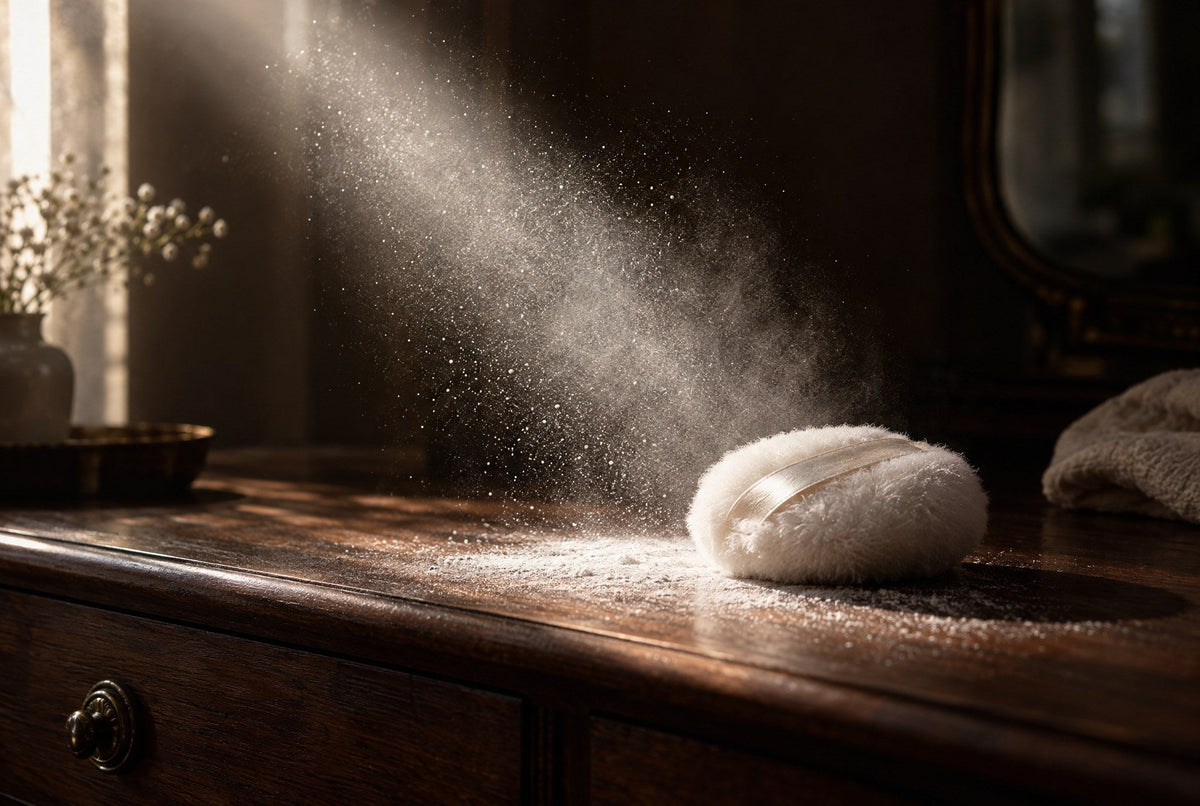
So why did "baby powder is bad" travel so far? Mostly because headlines and kitchen-table talk folded several separate worries into one short sentence. Two concerns tend to ride inside that phrase. The first is about ingredients: whether a powder is talc-based or talc-free. The second is about method: a powder shaken hard enough to hang in the air behaves differently from one shaken on gently, close to the skin. Collapsing both into "bad" blurs the real picture.
The easiest way to compare baby powders is to start with the main ingredient. If you want a simple explanation of what “talc-free” actually means, the difference between talcum powder and baby powder breaks it down clearly. When choosing a powder, check both the front label and the ingredient list rather than relying on the words “talc-free” alone.
The Two Jobs Powder Actually Does Well
Strip away the headlines and a powder has a short job description: two tasks, both about comfort at the diaper line. Knowing them makes it obvious when a bottle earns its place and when something else fits better.
The first job is moisture. A powder helps skin feel dry, which matters most in the diaper area after cleaning, once the skin is fully dry. Dusted on at that moment, it keeps the area feeling fresh between changes. The second job is friction. In warm weather, thigh rolls and the soft creases where skin meets skin tend to rub, and a light dusting eases that chafing. Both come back to the same idea: less damp, less rubbing, more comfort.
The Mavey Jaymes Talc-Free Baby Powder is made for exactly those kinds of moments. Its blend of organic flour, calendula, and arrowroot helps absorb excess moisture while keeping the formula short and easy to understand. That makes it useful around the diaper line, skin folds, thighs, underarms, and other areas where dampness and rubbing can make skin feel uncomfortable. Rather than creating a cloud of loose powder, it is best shaken on close to the skin, right where it is needed.

There are times when powder should not be the first step. If the skin is actively wet, broken, or weeping, start with gentle cleansing and careful drying instead. Used on clean, dry skin as part of a simple routine, the Mavey Jaymes powder does what parents usually want from this kind of product: helps keep moisture-prone areas drier, reduces the uncomfortable feel of friction, and stays easy to work into everyday changes.
A Short Shopping Checklist for the Powder Aisle
For a parent standing in the aisle, the real question is quieter than "is baby powder safe?" It usually sounds more like: which one here feels like the simplest, clearest choice today? A short checklist settles that faster than scanning every label.
- Check "talc-free" on the front and the panel. The phrase should sit plainly on the label, and the ingredient list should back it up rather than leave a parent guessing.
- Favor a short ingredient list a parent can actually read. Fewer names mean fewer things to look up at the changing table, which matters most for delicate skin at the diaper line.
- Look at how the bottle dispenses and closes. A container that lets a little out at a time, rather than one that puffs a cloud with a hard shake, keeps the gentle, low application easy to repeat. A locking cap, like the one on Mavey Jaymes powder bottles, keeps the powder sealed in a diaper bag and prevents spills at the changing table.
- Choose something identifiable and easy to rebuy. A clearly labeled bottle a parent can repurchase beats a mystery container pulled from the back of a cabinet with a worn-off label.
These four habits cover most of the "is it safe" worry. Talc-free speaks to the talc-specific concern, a readable label speaks to trusting what is inside, and the dispensing point feeds straight into application.
A clearly labeled option for a family that wants a gluten-free formula is the Mavey Jaymes Gluten Free Baby Powder, made with organic ingredients and no wheat flour, and scented with natural lavender. The Talc-Free powder is made with organic flour, so families who need a wheat-free formula should choose the Gluten-Free version.

A Simple Routine for Using Powder at the Changing Table
Powder does its best work when it stays on the skin instead of rising into the air, and the difference between those two outcomes comes down to method. A few small habits, done in the same order every time, keep the step quick and easy.
The order matters more than any single move:
- Set out the diaper, wipes, and powder before the baby is on the mat, so nobody is uncapping a bottle one-handed over a wiggly baby.
- Clean the area gently, taking the time the skin needs rather than rushing it.
- Pat the skin fully dry, then do a quick dry test: a fingertip laid on the skin should feel dry, not cool or tacky.
- Apply a light dusting directly to the diaper area and skin folds, keeping the bottle low and away from baby's face.
- Shake it on close to the skin, right over the creases and places where skin rubs, rather than dusting a broad cloud.
- Cap the bottle before reaching for the fresh diaper, which keeps stray powder off the mat.
- Fasten a clean diaper and check the fit, snug enough to stay put but not so tight that it rubs.
A light dusting is the goal. It covers moisture and friction without caking, so there's no need for a thick coat.
Two small signs flag a slip. Powder that clumps or cakes usually means the skin was not quite dry yet, so the fix is a longer pat-dry and another dry-test. Visible dust in the air usually means the bottle was held too high, so keep it low and close to the skin. Either way, the routine holds; only the amount and the height change.
Why Parents Choose Mavey Jaymes
Mavey Jaymes was created with a simple idea in mind: baby care should feel easy to understand and easy to use. The brand was founded by a dad looking for a better option for his own family, and that practical approach still shows in the products today.
The range focuses on straightforward formulas designed for everyday moments, from diaper changes and bath time to dry skin, massage, and moisture-prone areas. Products such as the Talc-Free Baby Powder, Organic Baby Oil, and Soothing Bath Pouches are made to fit into routines parents are already doing rather than adding extra steps.
That simplicity is a big part of the appeal. Ingredients are easy to recognize, products have a clear purpose, and the range works across different stages of family life.
If you are looking for baby care that keeps things simple without feeling basic, explore the Mavey Jaymes collection and find the products that fit your family’s routine.
Frequently Asked Questions
Why are some parents concerned about baby powder?
Most concerns come from two things: older talc-based formulas and the amount of loose powder that can become airborne during use. That does not mean every baby powder is the same. A practical approach is to choose a talc-free formula, check the ingredient list, and apply a small amount close to the skin rather than shaking powder into the air.
Is talc-free baby powder safer?
Talc-free powder avoids the talc-specific concern by using a different base ingredient. How the powder is applied still matters. Use a small amount on clean, dry skin and keep it away from a baby's face so less powder ends up in the air.
Can you use baby powder on a newborn?
Yes. Once the skin is clean and fully dry, apply a light dusting to the diaper area and creases, keeping the bottle low and away from baby's face.
What should I look for in a baby powder?
Start with three things: a clearly talc-free formula, a short ingredient list you can understand, and packaging that makes it easy to control how much comes out. One option that fits that approach is the Mavey Jaymes Talc-Free Baby Powder, with a short list of organic ingredients like flour, arrowroot, and calendula. For families avoiding wheat, the Gluten Free Baby Powder is made without wheat flour.
What is the difference between talcum powder and baby powder?
Baby powder is a general product category, while talcum powder refers to powder made with talc. Not every baby powder contains talc. The difference between talcum powder and baby powder explains how to tell the two apart by reading the ingredient panel rather than relying only on the wording on the front of the container.